

The continuous push towards Artificial Intelligence has left some workers feeling weary. The fear of replacement, the overwhelming number of possible uses, and the question of quality has cast AI in a negative light for many. While AI has been shown to create efficiencies, the successful implementation of this technology requires proper investment in time, energy, and resources.
Common Reservations Towards AI
AI can cause distrust, both in the accuracy of its work and of a company’s intentions. We’ve already seen companies like Amazon and Pinterest announce mass layoffs this year to move towards an AI-focused structure. When asked to incorporate AI into their workflows, employees may feel that they are training AI to do their job. This insecurity can lead to reluctancy or even refusal to adopt the technology.
Some question the quality of work done by AI. Many employees that use AI spend additional time reviewing or revising the results. This can lead to negative opinions towards AI, because it seems to actually waste time. A lack of training can produce both poor attitudes and results. According to Workday, 89% of organizations reported that less than half of their roles had been updated with AI-related skills. Employees are heavily encouraged to use AI, yet are given little training or advising of what job functions should be done with it.
Encouraging Employee Engagement
Despite employee concerns, AI has proven to be successful in many workplaces. Over 80% of employees who regularly use AI tools at work report saving time, enabling them to reinvest their time in other ways, according to Indeed’s Hiring Lab. Like most things, what you put into it is what you will get out of it. By investing in the proper time and resources, companies can reap the benefits of AI.
Using an Interactive Approach
To avoid causing fear or frustration, organizations should be transparent about their plans to use AI. Consider having conversations with employees to determine what work duties could benefit from using AI, and how it could affect their processes. This signifies that AI is being used as a tool for efficiency, rather than as a replacement. Open dialogue can build trust with employees, making them more inclined to use AI.
Employers should also provide clear guidelines and expectations for AI usage. The first step to incorporating AI should be to create a policy that outlines proper procedures, including what functions AI should be used for, what platforms should be used, and the need to review the work produced.
Training as an Investment
The next step is to train and upskill employees. According to Workday, 89% of organizations reported that less than half of their roles had been updated with AI-related skills. Employees are more likely to use AI if they are given the proper training to use it strategically, which also improves the work that is produced.
While organizations may feel that they need to dive headfirst into AI, it is wise to take a slow and steady approach. By determining what functions would be improved or completed more efficiently with AI, a plan for strategic execution can be created. Consider using a phased approach to implementation, so employees can gradually build their skills without feeling overwhelmed.
By reframing the use of AI in the workplace as an opportunity for professional development, employees can feel that they are being invested in, rather than left behind. This can create positive results for both parties; employees are taught crucial skills that can improve their work, and employers can get the most out of their investment in AI.
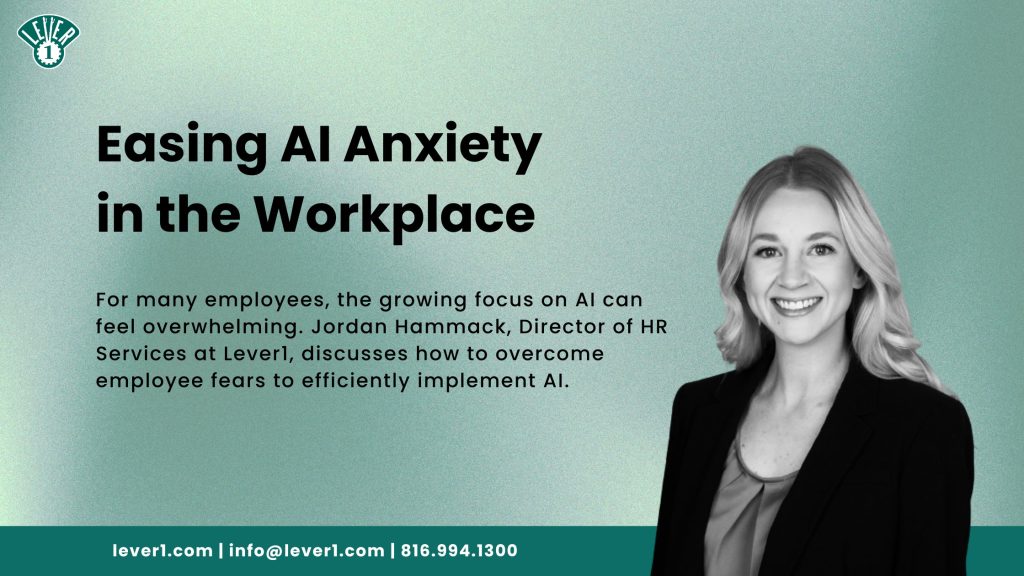
Jordan Hammack | Director of HR Services
Jordan provides multiple years of both management and HR experience. Throughout her time in these positions, she found her passion was providing support and resources to employees and management alike. At Lever1, Jordan leads new client implementation and assists new companies in establishing policies and procedures, a company handbook, job descriptions, training and development, and more.