

Every manager will eventually face it — an employee who starts missing shifts without explanation, seems withdrawn in team meetings, or says something that makes you stop and wonder if they’re okay. In those moments, most managers freeze. Not because they don’t care, but because nobody taught them what to do next.
At Lever1, we work alongside businesses every day to build workplaces where people are supported — not just when things are going well, but especially when they’re not.
Here’s a practical starting point for responding when an employee appears to be in crisis.
Start with the Person, Not the Policy
When you notice something is off, lead with humanity. A simple, private check-in — “Hey, I’ve noticed you seem like you’ve had a lot on your plate lately. How are you doing?” — can open a door that policy alone never will. You don’t need a script. You need to be present and non-judgmental.
What you should avoid: pressing for a diagnosis, asking pointed questions about mental health, or making assumptions. Your role as a manager isn’t to be a therapist. It’s to make sure the employee knows someone noticed and that support is available.
Know Your Internal Process Before You Need It
One of the biggest mistakes companies make is trying to figure out their crisis response in the middle of a crisis. Build your internal process now, while things are calm.
That means knowing who the right internal contact is when a concern is raised (typically HR), when to call 911, and when to refer an employee to the 988 Suicide and Crisis Lifeline. It also means training managers periodically — not just once during onboarding — so these steps stay fresh.
A written, accessible response plan isn’t bureaucracy. It’s preparation.
Understand Your Legal Obligations
Employee mental health intersects with real legal requirements. The ADA may require reasonable accommodations for employees with mental health conditions — things like a modified schedule, additional breaks, or temporary remote work. FMLA may apply if the situation involves ongoing treatment or inpatient care.
This is also where a PEO like Lever1 becomes a meaningful resource. Navigating the interaction between leave laws, accommodation requirements, and state-specific regulations is complicated, and getting it wrong carries real risk. Our HR specialists help businesses work through exactly these situations — making sure responses are both compassionate and legally sound.
Handle Absences with Consistency and Flexibility
Unexplained absences often signal something bigger. While employers are allowed to enforce attendance policies, a blanket approach can create legal exposure when an employee’s absence is connected to a health condition.
Build attendance policies that are consistent across your workforce and allow room for HR evaluation before moving toward disciplinary action or separation. The goal is a process that’s fair to the business and to the employee — not one that creates liability down the road.
Promote Your EAP — Loudly and Often
If you offer an Employee Assistance Program, it’s one of the most underutilized tools in your benefits package. EAPs provide confidential counseling and referrals at no cost to the employee. But if your team doesn’t know it exists, it can’t help anyone.
Mention it during onboarding, in benefits communications, and when situations arise that make it relevant. Normalize it. Frame it as a benefit, not a last resort.
Support Doesn’t End at Return-to-Work
When an employee comes back after a mental health-related leave, the first few weeks matter. Schedule regular check-ins, revisit expectations together, and be open to accommodations as they readjust. A thoughtful return-to-work process isn’t just good HR practice — it often determines whether the employee stays and thrives long-term.
Managing a team means showing up for people through their hardest seasons, not just their best performance reviews. With the right plan, the right partners, and the right culture, you can do both.
Lever1 helps businesses build HR infrastructure that protects employees and employers alike. Reach out to learn how we can support your team.
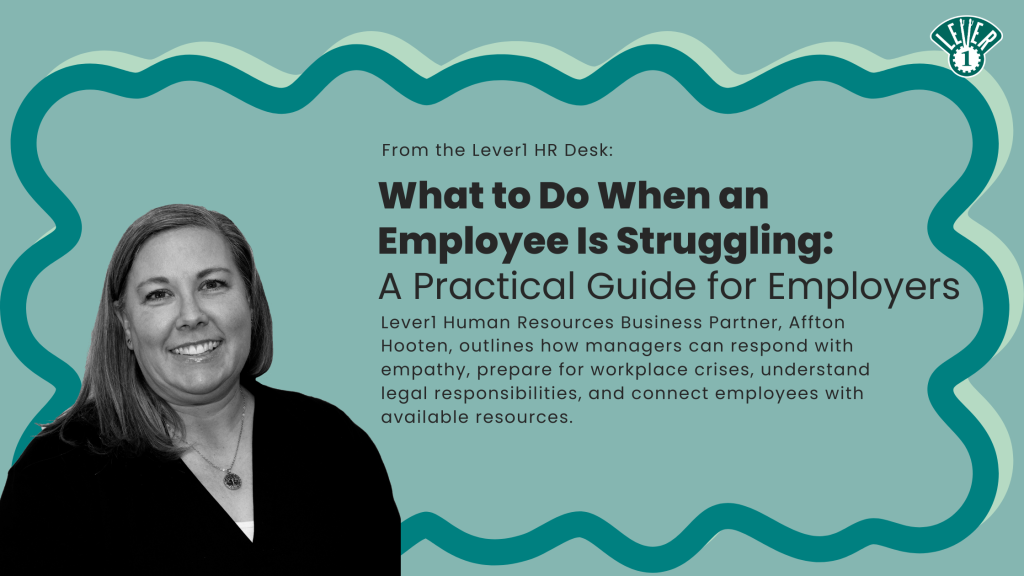
Affton Hooten | Human Resources Business Partner | PHR, SHRM-CP
Affton Hooten brings a comprehensive background in full-cycle recruiting, employee relations, benefits administration, and HRIS management. Known for her organizational strengths and collaborative approach, Affton has successfully supported HR operations across diverse industries. Currently serving as an HR Business Partner, Affton provides strategic HR support to multiple client organizations, focusing on compliance, employee relations, benefits, and performance management. Affton is passionate about streamlining HR processes and fostering inclusive, high-performing workplace cultures.